
Visit Our Shop
Shop #43, New Jewellers Center, Somerset Street, Saddar, Karachi

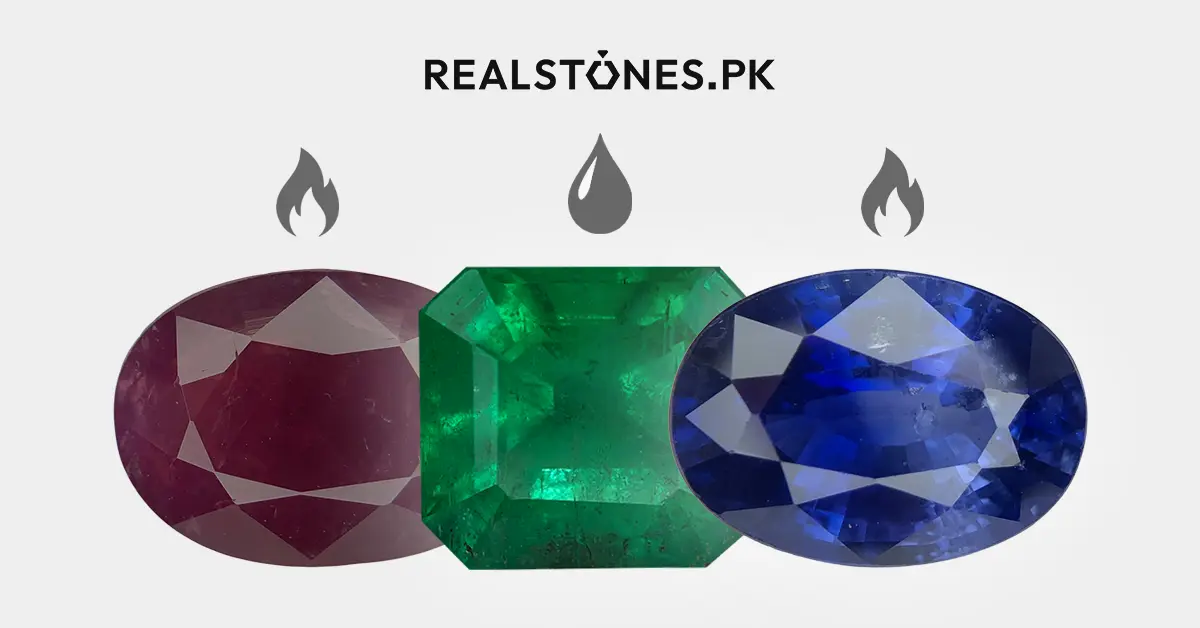
Anyone shopping for a ruby, sapphire, or emerald will encounter the topic of treatments. These processes are a standard part of the gemstone world and have been practised for generations. Understanding them helps buyers appreciate a stone’s true quality and ensures informed decisions when making a purchase.
Treatments do not mean a gemstone is fake or inferior. What matters is the type of treatment, how much it changes the stone, and whether it has been clearly disclosed.
Most rubies on the market have been heat treated. This process involves carefully heating the stone to enhance its natural red colour and reduce cloudiness. No colour or foreign material is added, so the ruby’s natural beauty is preserved. Heat treatment is permanent and widely accepted. Unheated rubies are rare and can command higher prices.
Some rubies are heated with a flux, often containing lead or borax, which allows small cracks to partially heal. This can make the stone appear cleaner than an untreated ruby. Because foreign material is introduced into the ruby, flux-healed stones are generally less valuable and are not considered premium-quality gems.
Rubies with multiple fractures are sometimes filled with glass to improve transparency and appearance. While visually attractive, these stones are less durable and have lower value. They are typically found in affordable jewellery rather than premium gemstone collections.
Heat treatment improves colour and clarity in sapphires and is widely practised. Most sapphires sold today have undergone this process. Untreated sapphires are rare and usually command a premium when their natural colour is strong.
Diffusion treatment introduces elements, most commonly beryllium, into the sapphire at high temperatures to enhance its colour. Often, the colour only affects the outer layer, and recutting can reduce its effect. Diffusion-treated sapphires are valued less than stones with natural colour.
Some sapphires with significant internal fractures are filled with glass to improve clarity and colour. These stones are less durable and their long-term value is lower. Glass-filled sapphires are generally used in affordable jewellery rather than investment-grade pieces.
Emeralds naturally contain internal fractures. To make them less visible and improve stability, they are commonly filled with clear oils or resins. This practice has been accepted for centuries. The overall visual effect matters more than the presence of oil itself.
Emeralds are often described by treatment level: none, minor, moderate, or significant. Stones with little or no treatment are generally more valuable, while heavily treated emeralds may be less stable and have lower market value. Full disclosure is important.
Modern resins may be used instead of traditional oils to improve clarity. While this enhances appearance, it may affect long-term durability. Resin filling should always be disclosed.
Treatments are only one factor in a gemstone’s worth. Colour, clarity, cut, carat weight, rarity, and overall appearance also contribute to its value.
A ruby, sapphire, or emerald with acceptable treatment and exceptional colour, clarity, and cut can be more desirable than an untreated stone with lesser visual appeal. Considering all these factors together provides a fair assessment of the gemstone’s true value.
A gemstone certificate confirms whether a stone is natural, what treatments it has received, and to what degree. Certification ensures transparency and protects buyers from uncertainty, allowing confident decisions based on verified information. For higher-value gemstones, certification also supports resale, insurance, and long-term trust in the investment.
Treatments are a natural part of the gemstone trade and should not be seen as a drawback. When disclosed clearly, they allow buyers to choose stones with confidence. The beauty and value of rubies, sapphires, and emeralds come from their natural characteristics and rarity rather than enhancements alone.
Exploring a curated collection of rubies, sapphires, and emeralds with clear treatment disclosure and certification can make the buying experience more rewarding. Whether selecting a gemstone for personal enjoyment or adding to a collection, understanding treatments ensures the stone is both authentic and suited to your preferences. Browse our gemstones with verified treatment disclosure and find the one that speaks to you.